
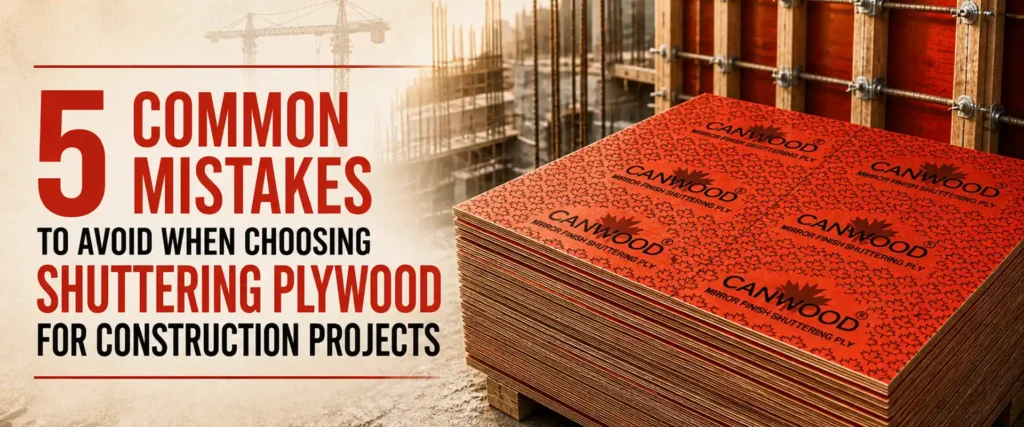
Shuttering plywood plays a critical role in concrete formwork and structural construction. It provides temporary support for concrete structures until the concrete gains enough strength to stand on its own.
However, selecting the wrong type of shuttering plywood can lead to poor concrete finish, higher project costs, and reduced durability.
Many contractors and builders unknowingly make mistakes when choosing plywood for formwork. In this guide, we highlight the five most common mistakes to avoid when selecting shuttering plywood for construction projects.
1. Ignoring Plywood Quality and Core Material
One of the most common mistakes is choosing plywood based only on price while ignoring the quality of the core material and veneers.
High-quality shuttering plywood is manufactured using:
-
Premium hardwood veneers
-
Strong bonding adhesives
-
Uniform thickness
Low-quality plywood may contain gaps in the core or inferior veneers, which can reduce strength and durability during construction.
Always check the core structure and bonding quality before purchasing plywood for shuttering applications.
2. Not Considering Load-Bearing Strength
Shuttering plywood must withstand heavy concrete loads and pressure during casting.
If plywood with insufficient strength is used, it can cause:
-
Bending or warping
-
Uneven concrete surfaces
-
Structural instability
Contractors should always choose plywood designed specifically for high-load-bearing applications in construction projects.
3. Ignoring Reuse Cycles
Many contractors fail to consider the number of reuse cycles when selecting shuttering plywood.
High-quality shuttering plywood can deliver 20+ reuse cycles, which significantly reduces overall project costs.
Low-quality plywood may only last a few cycles, leading to:
-
Frequent replacement
-
Higher material costs
-
Project delays
Choosing durable plywood ensures better cost efficiency for large construction projects.
4. Overlooking Water Resistance
Construction sites often expose materials to moisture, rain, and humidity. If plywood lacks proper water resistance, it can swell or delaminate.
High-quality shuttering plywood should feature:
-
Waterproof adhesive bonding
-
Film-faced surface coating
-
Moisture-resistant veneers
These features protect the plywood from water damage and extend its lifespan.
5. Choosing Suppliers Without Manufacturing Expertise
Another major mistake is purchasing plywood from suppliers who lack manufacturing expertise or quality control standards.
Reliable manufacturers follow strict production processes including:
-
Quality veneer selection
-
Precision pressing techniques
-
Multiple quality inspections
Buying from an experienced manufacturer ensures consistent quality and reliable supply for construction projects.
Conclusion
Choosing the right shuttering plywood is essential for successful construction projects. By avoiding common mistakes such as ignoring plywood quality, load-bearing strength, water resistance, and reuse cycles, contractors can ensure better performance and cost efficiency.
Always work with trusted plywood manufacturers that offer high-quality shuttering plywood designed for demanding construction applications.